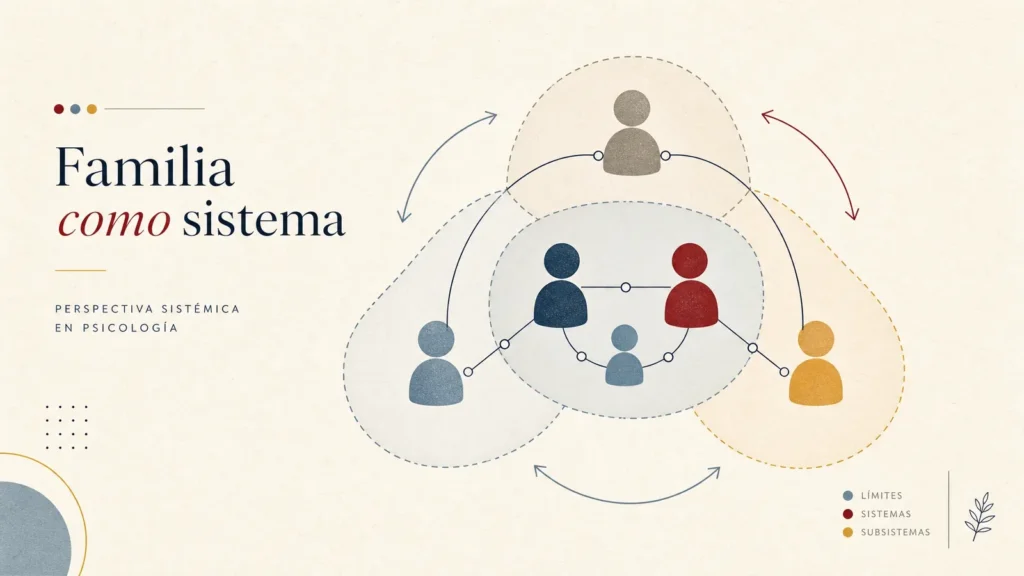
Family Systems Theory: The Family as a System
How systems thinking changed the way family problems are described: wholes, patterns, feedback and what a clinician looks at first.
Study guide by area
Clinical psychology is the branch of the discipline concerned with understanding psychological distress and with the methods used to assess and treat it. For a student, the challenge is less about memorizing labels than about learning how clinicians reason: how they gather information, form hypotheses, tell similar presentations apart and recognize the limits of what they can conclude from the data in front of them.
The guides here explain family and systemic models, assessment tools such as clinical interviews and the ethical frameworks that shape practice, always from an educational point of view. They are written to help you study. They do not offer diagnosis or treatment, and reading about a condition is no substitute for an evaluation by a qualified professional who knows you. If you are struggling yourself, contact a mental health professional near you or your local emergency number.
Read with an academic eye: studying a concept is not the same as diagnosing anyone.
How systems thinking changed the way family problems are described: wholes, patterns, feedback and what a clinician looks at first.

A student-oriented guide to the structure, question types and limits of the semi-structured clinical interview.